Damp rooms
Persistent high humidity can contribute to comfort complaints and moisture concerns.
Humidity monitoring + indoor-air indicators
HumiDR monitors humidity and key indoor-air indicators so small commercial buildings can understand when rooms are too damp, too dry, stale, dusty, or changing over time.
Simple sensors. Clear reports. Practical next steps.
Why humidity matters
Rooms can feel musty, stale, damp, dry, or uncomfortable even when the HVAC system appears to be running. HumiDR helps turn those complaints into visible trends by monitoring humidity, temperature, CO2, particles, and VOC indicators.
Persistent high humidity can contribute to comfort complaints and moisture concerns.
Low humidity can make rooms feel uncomfortable, especially during heating season.
CO2 trends can indicate when occupied spaces may need ventilation review.
PM readings can help reveal spikes from outdoor air, activity, cleaning, or filter issues.
What HumiDR monitors
HumiDR focuses on the readings that help explain recurring room complaints: moisture balance, temperature, occupancy-driven ventilation indicators, particle events, and VOC indicator trends.
HumiDR is a trend-monitoring and maintenance-awareness service, not a laboratory test or medical diagnostic device.
Compact monitoring
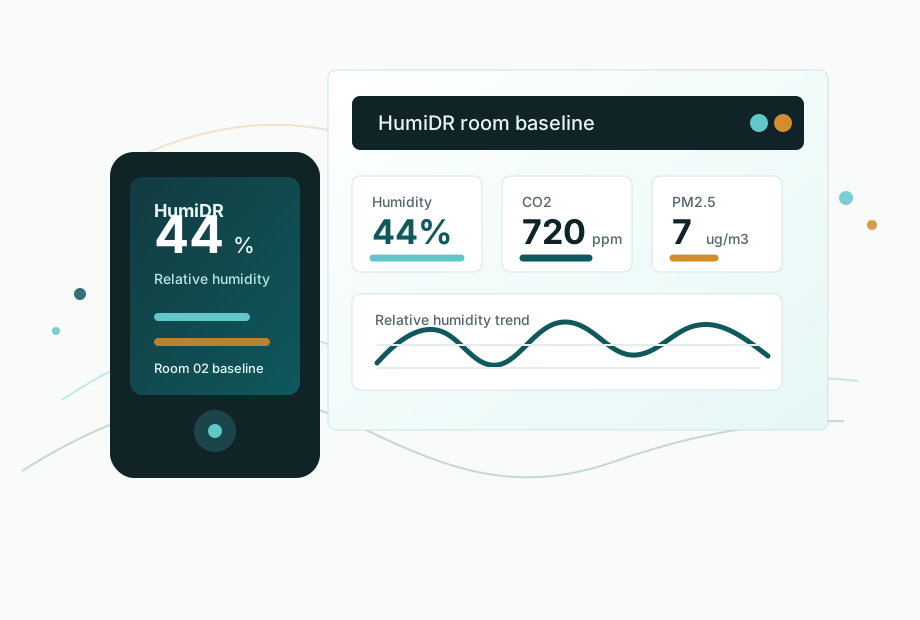
HumiDR can start with compact wireless monitoring devices placed in waiting rooms, classrooms, treatment rooms, offices, gyms, salons, or other spaces where comfort and air conditions matter.
How HumiDR works
We place monitors in representative rooms where comfort and air conditions matter.
We collect an initial humidity and air-indicator baseline for each room.
HumiDR tracks trends and flags persistent out-of-range conditions.
You receive a simple report with readings, trends, and recommendations.
Next steps may include filter replacement, dehumidification, ventilation review, HVAC service, or portable filtration.
Service plans
Final pricing depends on number of rooms, monitoring devices, reporting needs, and whether HumiDR is paired with BHEIR AirCare.
For one-time baseline readings.
For small commercial spaces.
For spaces with multiple rooms or higher concern.
For multi-site clients.
Best-fit spaces
Watch rooms where occupancy, activity, and comfort complaints can change through the day.
Track humidity and ventilation indicators in rooms used heavily during short windows.
Create a simple record of comfort and air-indicator trends for patient-facing areas.
See when smaller enclosed rooms drift damp, dry, stale, or particle-heavy.
Monitor humidity and VOC indicator trends in rooms where services and products change the air.
Review occupancy-driven CO2, humidity, and particle trends after classes or peak periods.
Report preview
HumiDR reports are built for owners and operators who need enough context to act, not a wall of sensor charts. The goal is to show what changed, where it happened, and what deserves attention.
Monthly room summary
Waiting room | May 2026 | 30-day monitoring pilot
Humidity stayed inside the target review band most days. CO2 rose during afternoon occupancy, which may be worth reviewing with the ventilation schedule.
30-day pilot
We will place a monitor, review the data, and show you whether your rooms are staying within a practical operating range.